Customer trust and policy-safe replies
Local review response guide for profile trust and customer clarity
Review responses are public service signals. They show whether the business listens, corrects mistakes, explains policies clearly, and avoids arguments in front of future customers. A good response routine supports trust without pretending that replies alone can guarantee rankings.
Response principles
A review response should be short, specific, and calm. Thank the customer, refer to the service context without exposing private information, and offer a practical next step if the issue needs follow-up. The goal is not to win an argument. The goal is to show future customers that the business handles feedback responsibly.
Do not copy the same sentence into every reply. Repeated template replies can make the business look inattentive, even when the intent is efficient. A simple structure is enough: acknowledgement, specific context, correction or appreciation, and contact path. The wording should change based on the review.
Never include sensitive customer details, medical or legal details, order information, private messages, or accusations. Even if the business believes a review is unfair, the public response should stay professional. If a review violates platform rules, use the platform reporting process separately instead of arguing inside the reply.
Positive reviews
Positive review responses should reinforce what the customer valued. If a customer praises fast pickup, helpful consultation, clean facilities, or clear pricing, the response can thank them and mention that the business is glad the specific experience was useful. This confirms real service strengths without turning the response into an advertisement.
Avoid asking for keywords or encouraging unnatural review wording. Customers should write their own experiences. The business can ask for honest feedback, but it should not script what customers say or pressure them for positive ratings. Policy-safe review operations are more sustainable than short-term attempts to manipulate profile signals.
Positive responses can also reveal missing content. If several customers praise parking guidance, appointment reminders, or same-day pickup, those details may deserve a clearer place on the website or profile. Reviews are not only reputation signals; they are customer research.
Negative reviews
Negative review responses should separate facts from emotion. Start by acknowledging the concern, then state the available correction path. If the business needs order details or private discussion, move the conversation to a contact channel. Do not publish private details to prove a point.
If the review reveals a real operational issue, say that the team will review the process. Avoid promises that cannot be verified, such as "this will never happen again." A stronger response is more concrete: "We will review the booking notice and pickup instruction so customers can see the timing before visiting."
If the review appears to be about a different business, still respond carefully. State that the business cannot identify the visit from the public review and invite the reviewer to contact the official channel. This protects the record without escalating the tone.
Operations loop
Review responses should feed back into profile maintenance. If customers repeatedly mention unclear opening hours, update the hours and holiday notice. If they ask about parking, add a photo or FAQ. If they misunderstand a service boundary, rewrite the business description. Reviews often expose information gaps that the owner has stopped noticing.
Track review themes monthly: service speed, location confusion, pricing clarity, reservation flow, staff communication, product availability, and after-service support. This does not need to be complex. A small spreadsheet with date, theme, action, and profile update is enough for most small businesses.
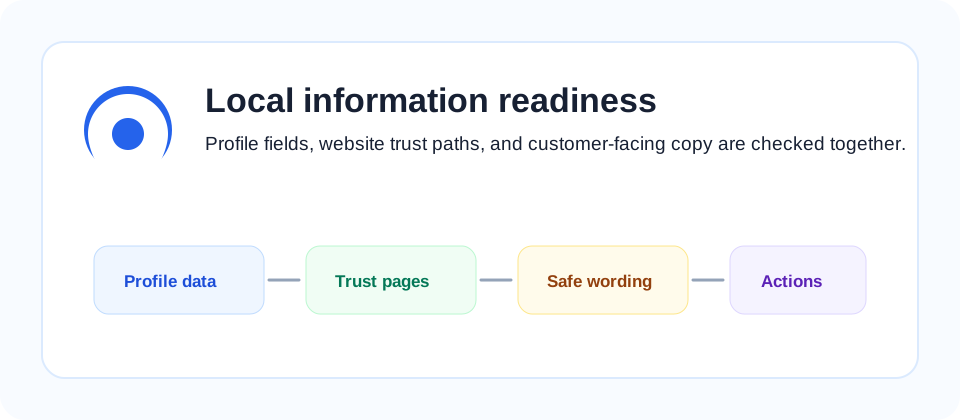
For LocalGEO AI diagnostics, review response quality is considered together with profile fields, website descriptions, trust pages, and customer action paths. A business that answers reviews responsibly but has outdated hours still has a profile problem. A business with accurate fields but hostile replies still has a trust problem.
Build a response library without sounding generic
A response library can save time, but it should be built from reusable parts rather than full copied replies. Keep separate snippets for greeting, appreciation, correction path, private follow-up, service clarification, and closure. Then combine only the parts that fit the review. This keeps responses consistent while still showing that a person read the customer message.
For positive reviews, the library can include short thanks and service-specific references. For neutral reviews, it can invite more detail through the official contact path. For negative reviews, it can acknowledge the concern and explain the next step without exposing private records. The library should never include attacks on the reviewer, keyword stuffing, or claims that the business cannot verify.
Review the library every month. Remove phrases that sound defensive, outdated, or too promotional. If several replies start to look identical in public view, rewrite the opening and closing patterns. Future customers often read review replies to judge tone, so the response library should make the business look attentive, not automated.
Also keep a short escalation rule. Reviews about safety, payment, privacy, or sensitive services should move to a documented contact channel quickly. Public replies can acknowledge the concern, but detailed handling should happen privately and respectfully. This protects customers and keeps the business from publishing information it should not disclose.
Use this guide with the business description guide and the local photo checklist. Together, these pages help a business maintain a profile that is accurate, current, and easier for customers to trust.
For platform-specific review and profile rules, check the Google Business Profile Help Center.
For customer communication and public content quality, compare response practices with Google Maps user contribution policies and Google's helpful content guidance.